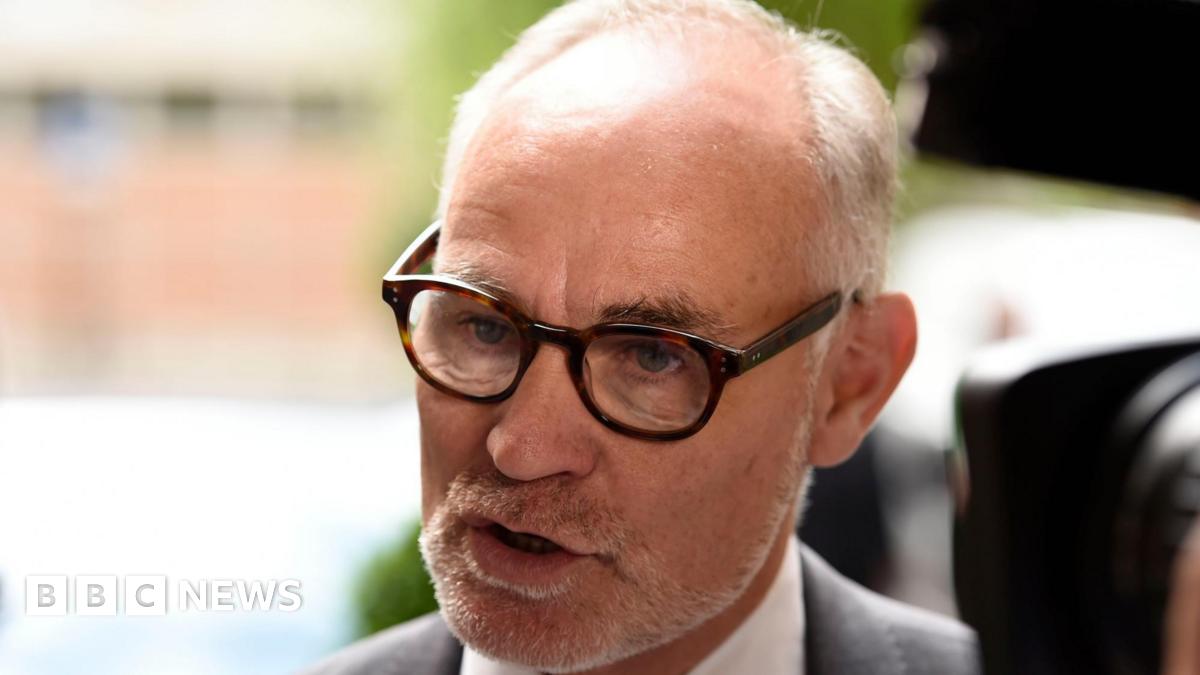
Former MP Crispin Blunt, a figure once deeply embedded in the British political landscape, including a stint as a justice minister, is now facing a serious legal challenge. The 65-year-old former representative for Reigate, Surrey, has been formally charged with four drug offences. This development, which has garnered significant public attention, follows a police search of his Horley residence last year, an action taken as part of a separate and unrelated investigation. The specific charges against Crispin Blunt include one count of possessing a Class A controlled drug and three counts related to the possession of Class B controlled drugs, casting a shadow over a distinguished parliamentary career that spanned over two decades.
The announcement from the Crown Prosecution Service (CPS) confirms that there is deemed to be "sufficient evidence to bring this case to court," and that pursuing criminal proceedings is considered to be "in the public interest." This decision underscores the legal system's commitment to accountability, irrespective of an individual's past public standing. As the case proceeds, the focus will undoubtedly be on the details of the allegations and the legal process that Mr. Blunt will now navigate. For those following the news surrounding mp blunt four offences, the upcoming court appearance represents a critical juncture.
The Charges Unveiled: A Former MP's Legal Ordeal
The allegations against Crispin Blunt are precise and carry significant weight within the UK legal framework. Specifically, the Class A drug he is accused of possessing is methylamphetamine, a substance known for its potent effects and severe legal penalties. The three Class B charges relate to the alleged possession of GBL (gamma-butyrolactone), cannabis, and amphetamine. These substances are also subject to strict controls and penalties, although generally less severe than those for Class A drugs.
The circumstances leading to these charges began on October 25, 2023, when police executed a search warrant at Mr. Blunt's home in Horley, Surrey. Crucially, this search was not initially prompted by suspected drug offences but was conducted in connection with a separate rape investigation. That particular investigation concluded with Surrey Police determining there was "insufficient evidence to proceed," and no further action was taken against Mr. Blunt in that regard. However, the subsequent discovery of alleged controlled substances during this search led to the present charges.
Malcolm McHaffie, the head of the CPS Special Crime Division, highlighted the rigorous process undertaken before charges were brought. "Our prosecutors have worked to establish that there is sufficient evidence to bring this case to court and that it is in the public interest to pursue criminal proceedings," McHaffie stated. This emphasizes the careful consideration and evidential thresholds that must be met before formal charges are laid against any individual, particularly in high-profile cases involving former public officials. The transparency of this process is vital in maintaining public trust in the legal system.
Understanding the Classification of Drugs
To fully grasp the gravity of the charges, it's helpful to understand the UK's drug classification system:
- Class A Drugs: These are considered the most harmful and carry the stiffest penalties. Examples include heroin, cocaine, ecstasy, LSD, and crack cocaine. Methylamphetamine, as alleged in Mr. Blunt's case, falls into this category. Possession can lead to up to 7 years in prison, an unlimited fine, or both.
- Class B Drugs: These are seen as less harmful than Class A but still pose significant risks. Examples include amphetamines (excluding methylamphetamine, which is Class A), barbiturates, cannabis, codeine, and GBL. Possession can result in up to 5 years in prison, an unlimited fine, or both.
- Class C Drugs: These are considered the least harmful of the controlled substances. Examples include anabolic steroids, benzodiazepines (e.g., Valium), and ketamine. Possession can lead to up to 2 years in prison, an unlimited fine, or both.
The charges against Mr. Blunt therefore cover substances at two of the highest classification tiers, reflecting the seriousness of the allegations he now faces.
A Distinguished Career Interrupted by Allegations
Crispin Blunt's political career is one marked by longevity and influence. He served as the Member of Parliament for Reigate, Surrey, for an extensive period, from 1997 until the dissolution of Parliament in 2024. During his tenure, he held various significant roles, including parliamentary under-secretary in the Ministry of Justice, responsible for prisons and probation, between 2010 and 2012. This particular role makes the current drug allegations particularly striking, given his past responsibilities within the justice system.
Elected initially as a Conservative MP, Mr. Blunt represented the party until October 2023, when he began sitting as an independent. His long career saw him involved in numerous parliamentary committees and debates, often speaking on foreign affairs and justice issues. The news of the drug charges has, understandably, sent ripples through political circles and among the constituents he once represented. It serves as a stark reminder that public figures, regardless of their past achievements or positions, are subject to the same legal scrutiny as any other citizen.
The journey from a prominent figure in government to facing criminal charges is a challenging one, highlighting the often-unpredictable trajectory of public life. This situation invites broader reflection on the intense pressures and scrutiny faced by those in political office, and the personal repercussions when such allegations come to light. The legal proceedings against Crispin Blunt are a testament to the principle that justice should be applied universally.
Navigating the Legal Landscape: What These Charges Mean
Crispin Blunt is scheduled to make his first appearance at Westminster Magistrates' Court on March 25. This initial court date will mark the formal beginning of the judicial process. During such proceedings, the defendant will typically enter a plea, and further directions for the case, including potential future hearings, will be set. It is a critical stage where legal teams begin to present their arguments and prepare for the road ahead.
An essential aspect emphasized by Malcolm McHaffie of the CPS, and indeed a cornerstone of the British legal system, is the right to a fair trial. "We remind all concerned that criminal proceedings against this defendant are active and that he has the right to a fair trial," he stated. This principle is not merely a formality; it is a fundamental safeguard against injustice, ensuring that individuals are presumed innocent until proven guilty beyond reasonable doubt.
Furthermore, McHaffie issued a vital caution regarding public commentary on the case: "It is vital that there should be no reporting, commentary or sharing of information online which could in any way prejudice these proceedings." This warning is crucial in the age of rapid digital communication, where speculation and unverified information can quickly spread, potentially influencing public opinion or even jury pools. Preserving the integrity of the judicial process requires restraint and adherence to established legal reporting guidelines, ensuring that the trial itself is the forum where evidence is properly presented and assessed.
The Importance of Due Process
The concept of due process is paramount in cases like these. It ensures that:
- Every accused person is aware of the charges against them.
- They have the right to legal representation.
- Evidence is presented fairly and openly in court.
- The accused has the opportunity to challenge evidence and present their defence.
- A verdict is reached by an impartial judge or jury based solely on the evidence presented in court.
These principles apply equally to Crispin Blunt, regardless of his former status, as he faces the serious implications of the mp blunt four offences.
Broader Implications: Public Trust and Accountability
When an individual who has held a position of public trust, particularly one within the Ministry of Justice, faces criminal charges, it inevitably triggers wider discussions about accountability and the integrity of public office. Such events can challenge public perception and raise questions about the standards expected of those who serve in government. However, it also reaffirms the principle that no one is above the law, a bedrock of democratic societies.
The case of Crispin Blunt will be closely watched, not only for its specific legal outcome but also for what it represents in terms of public scrutiny of political figures. It serves as a powerful reminder that while individuals may transition out of formal roles, the expectation of lawful conduct remains. The justice system's role here is to impartially weigh the evidence and deliver a verdict, upholding the rule of law for all citizens.
This situation also highlights the often-private battles that public figures may face, even as they project an image of steadfastness and authority. The resolution of this case will contribute to the ongoing narrative surrounding ethics in public service and the rigorous standards to which former and current politicians are held.
Conclusion
The charges against former Reigate MP and ex-justice minister Crispin Blunt mark a significant and unfolding legal event. Accused of possessing Class A methylamphetamine and Class B drugs including GBL, cannabis, and amphetamine, Mr. Blunt is set to appear at Westminster Magistrates' Court on March 25. The Crown Prosecution Service has confirmed that sufficient evidence exists to proceed, and that pursuing these criminal charges is deemed to be in the public interest. As the legal process begins, the fundamental principles of a fair trial and the presumption of innocence will guide the proceedings. All eyes will now be on the courts as this high-profile case involving mp blunt four offences progresses, underscoring the universal application of the law.